Launch offer — valid today only

📄 Digital book in PDF · read it on your phone or print it

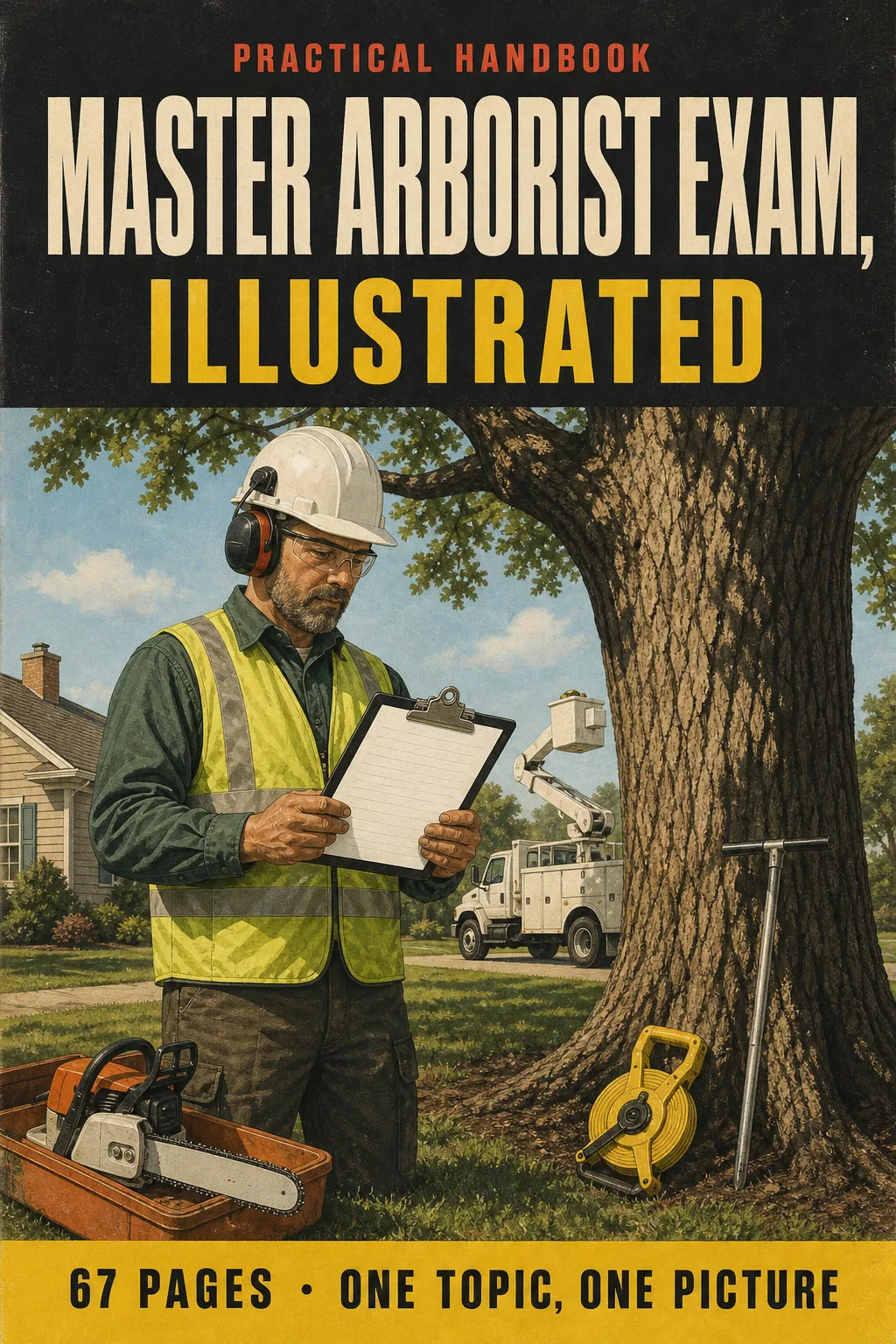
The Master Arborist Exam in Drawings: Every Scenario on the Same 5-Step Path One Topic on Every Page

The trunk in cross section, CODIT, the soil texture triangle, pruning cuts, cabling, the two risk matrices, tree protection zones and urban forestry. Every topic has its own page: the drawing first, then what you need to remember. 67 illustrated pages.

START STUDYING THIS WAY

🔒 Secure checkout · PDF by email · 30-day guarantee

Every topic, its own pageEach cut, wall and matrix drawn, with the explanation right beside it
67 illustrated pages9 parts, from how the master exam thinks to the final review
Up-to-date sourcesChecked against the current ANSI A300 and ANSI Z133 editions and the published master arborist exam outline
PDF by emailFormat

Look Inside the Book

Every page has one big drawing and a box with the numbers, rules and steps you need to know:

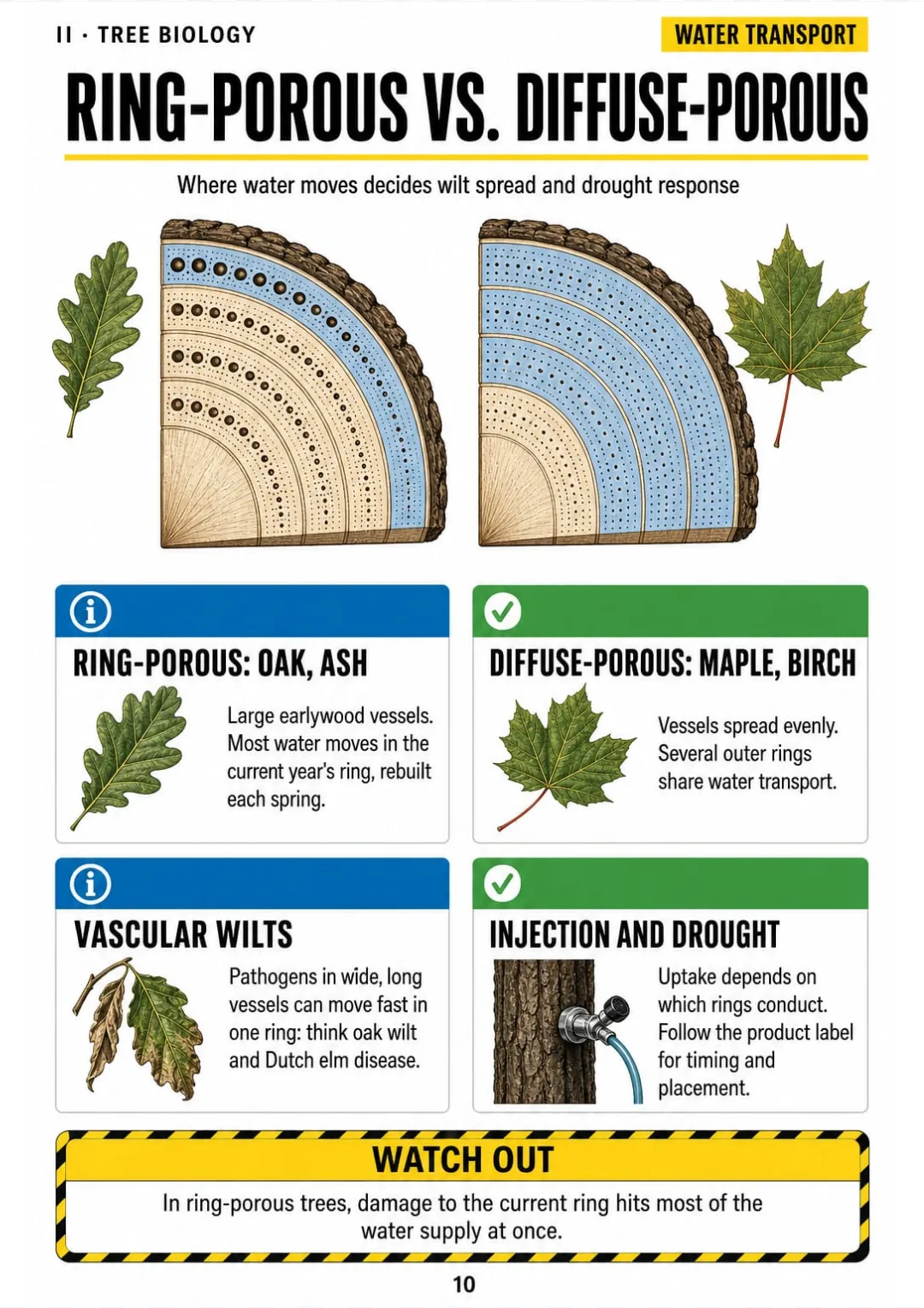
Ring-porous (oak, ash) vs. diffuse-porous (maple, birch), drawn side by side.
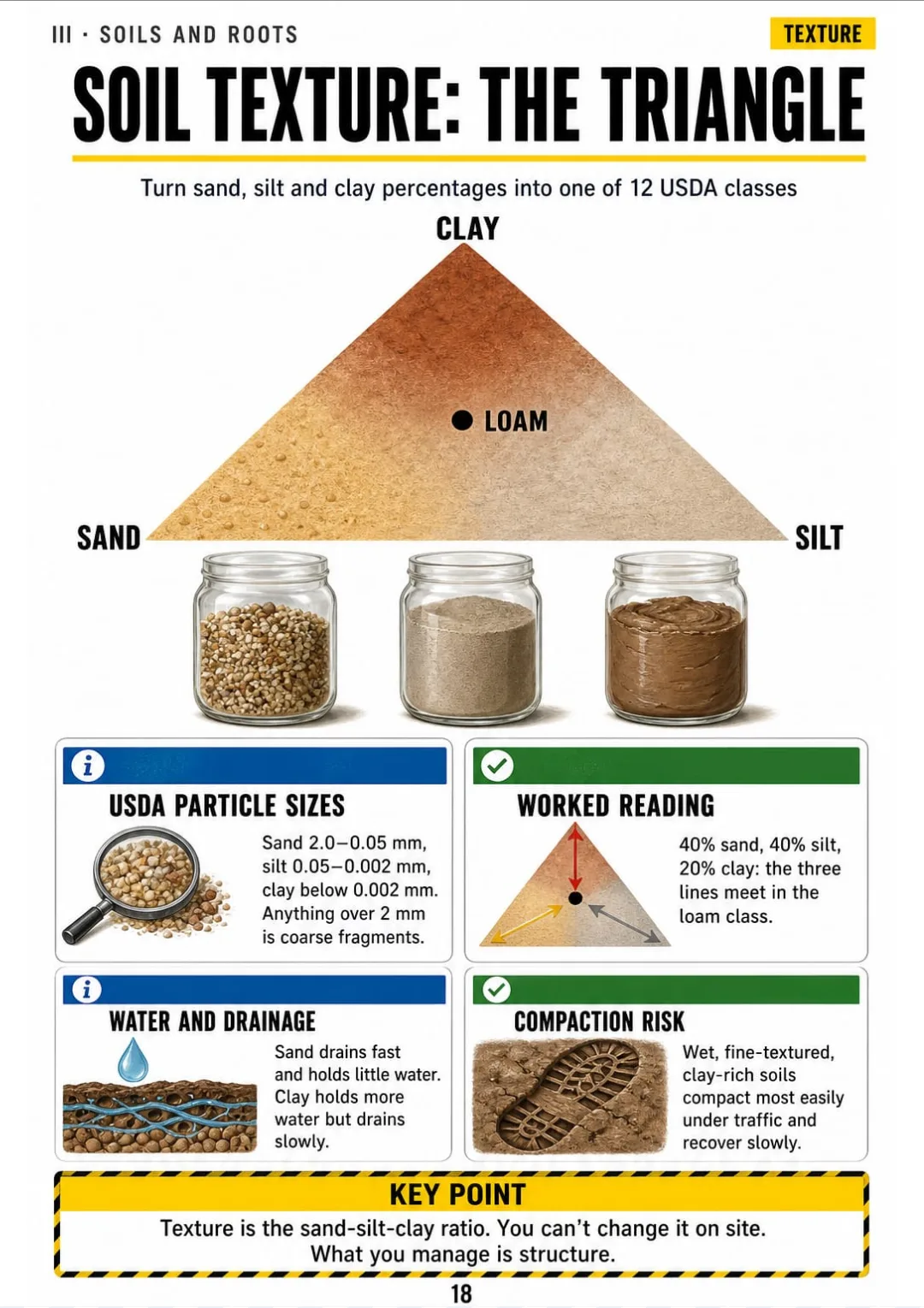
40% sand, 40% silt, 20% clay = loam: one worked reading on the USDA triangle
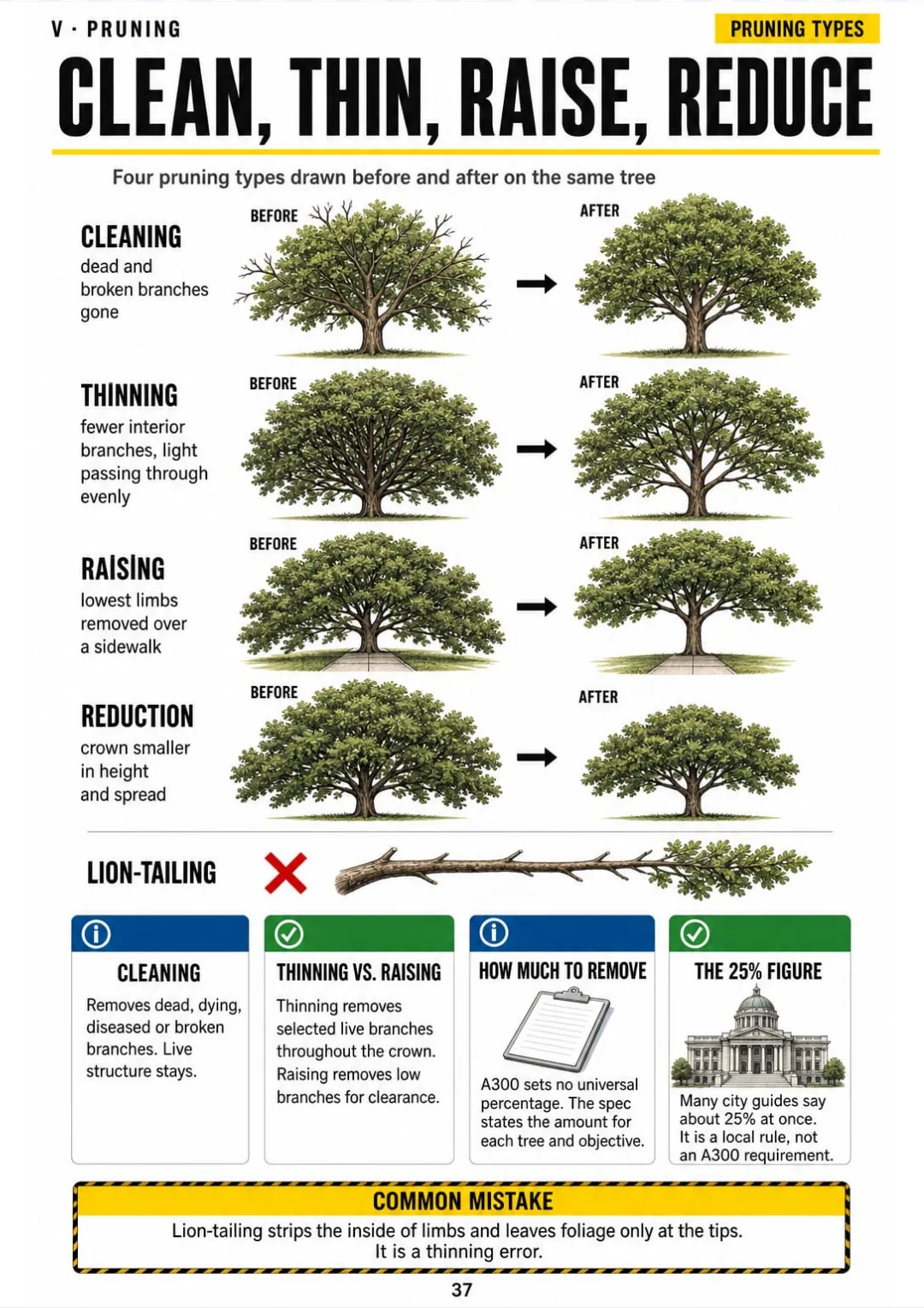
Cleaning, thinning, raising, reduction before and after; no universal percentage in A300.
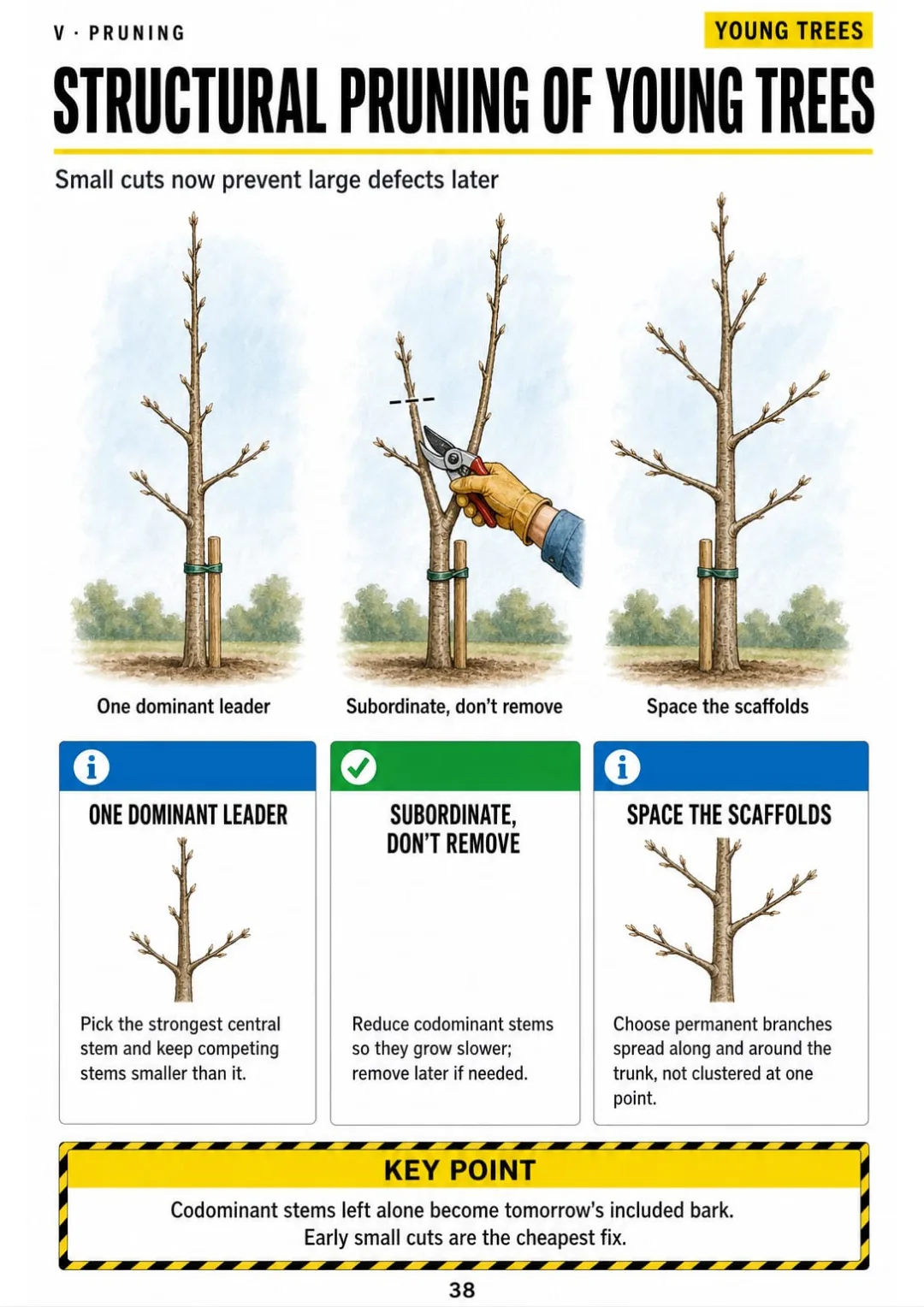
One leader, subordinated codominants and spaced scaffold branches, shown over the years.
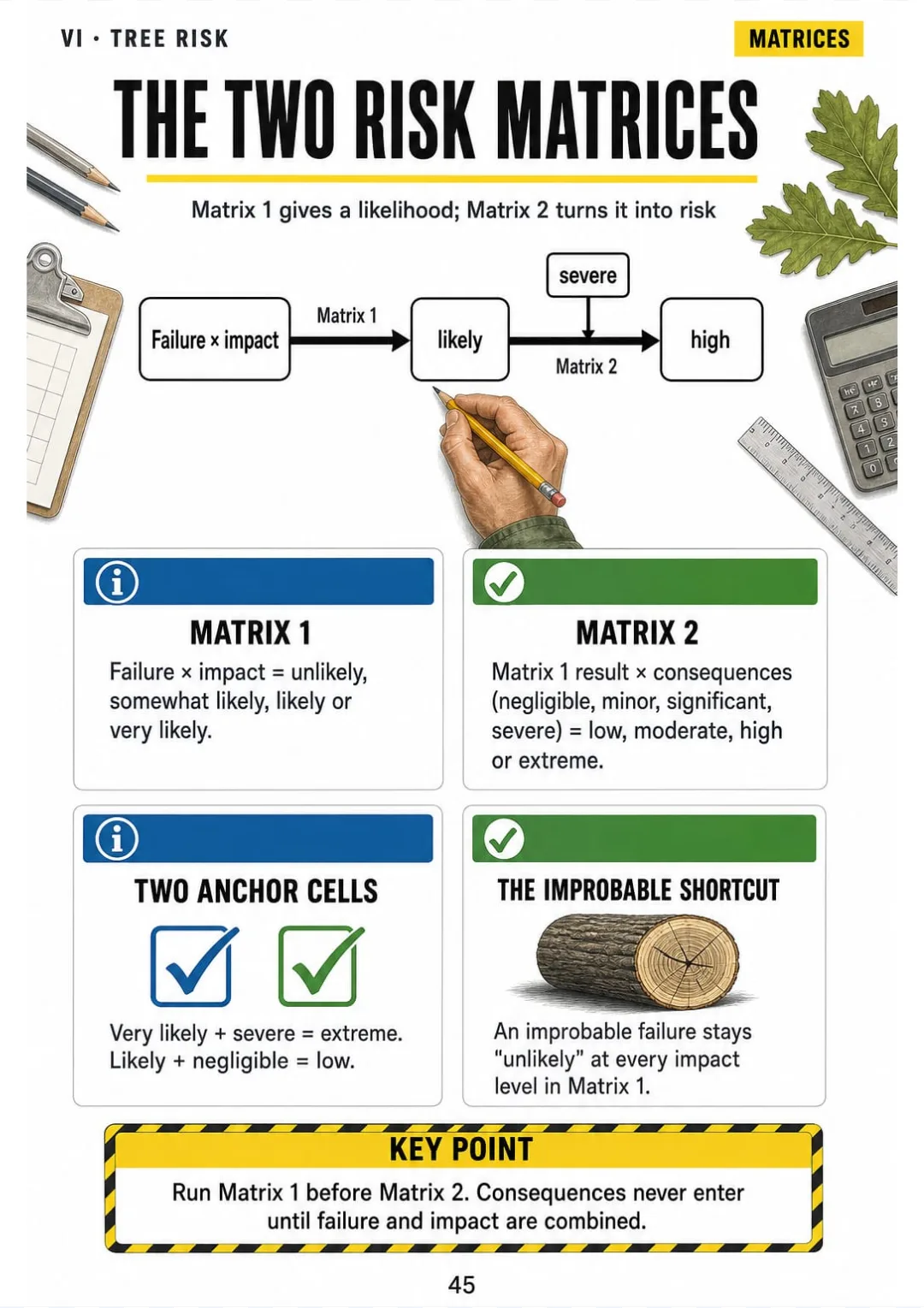
Worked case: probable + high impact → likely; likely + severe → high risk
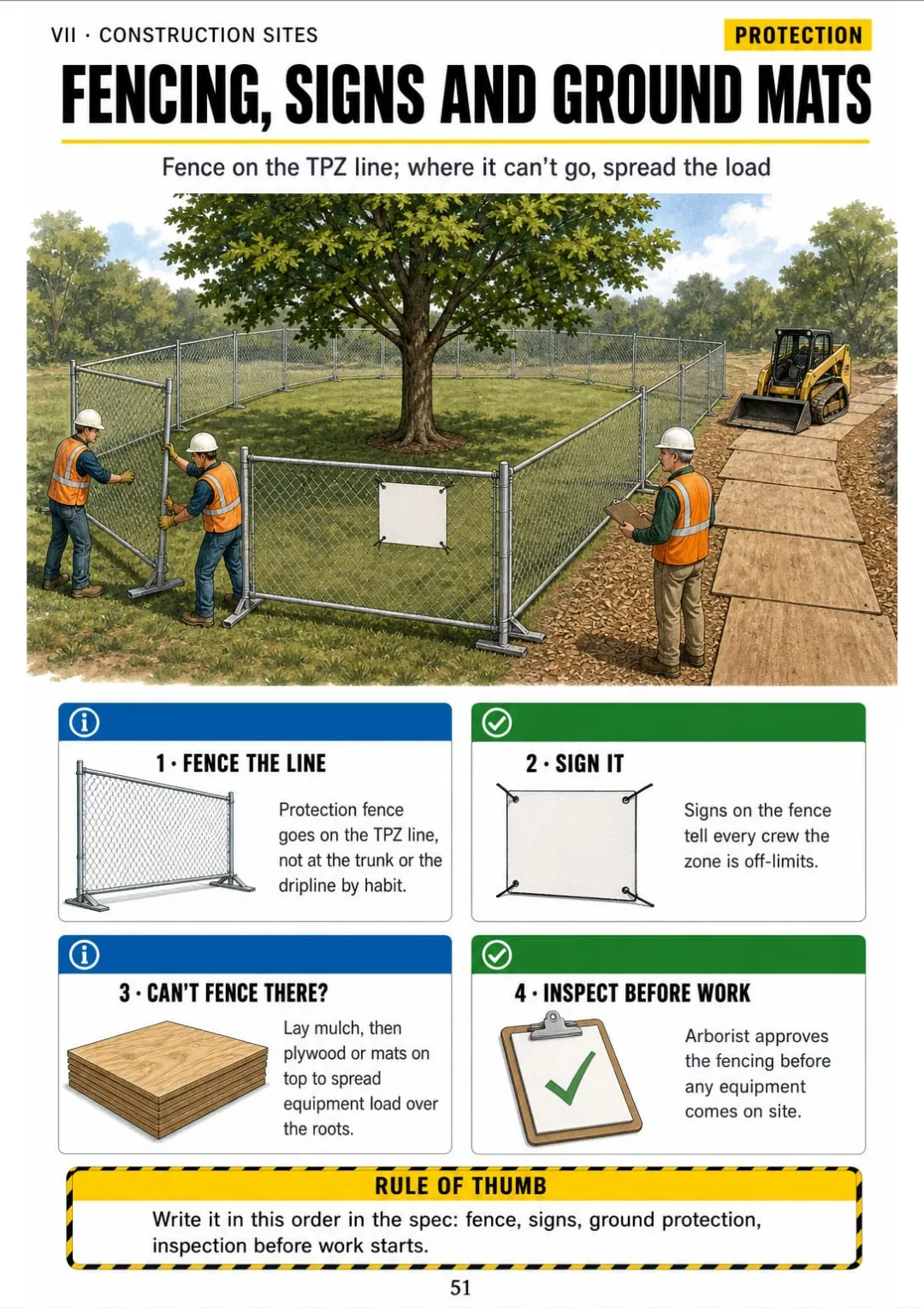
Fence on the TPZ line, signs on the fence, mulch plus plywood or mats where equipment must cross.
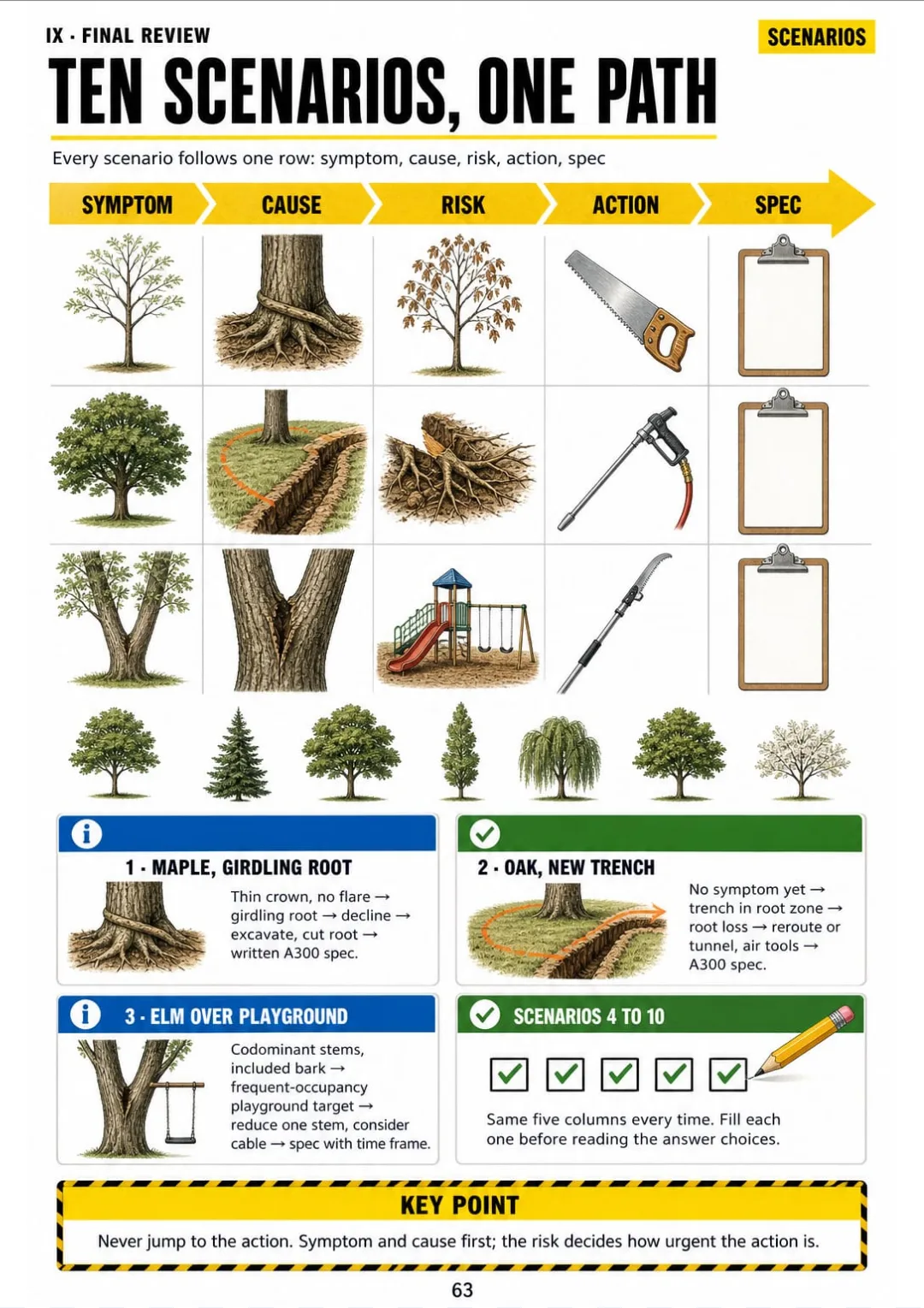
Girdling root, trench, codominant elm: symptom → cause → risk → action → spec, one row each
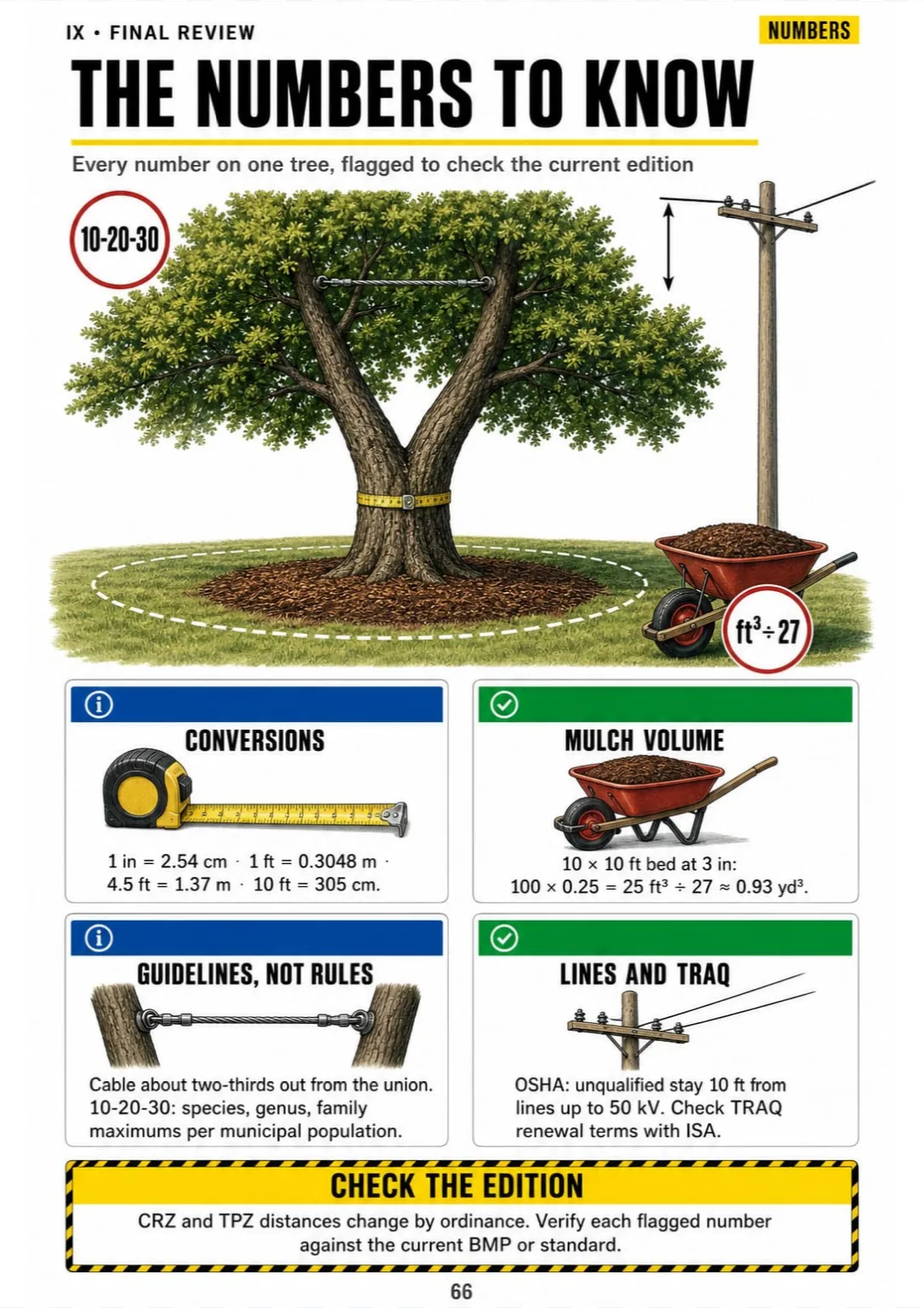
DBH 4.5 ft, mulch 2-4 in, CRZ 1 ft per inch, cable ≈ 2/3, 10-20-30, ft³ ÷ 27

Swipe to see more →

These are real pages from the book. The table of contents is the full one: 9 parts and 63 topics.

The Problem Isn't You. It's How It Was Explained to You.

You're reading a scenario about a heavy lateral limb that has to come off a mature oak, and the four answers describe cuts in four different orders. You've done this cut a thousand times, and now you hesitate.

The manual covers it in a paragraph: a cut from below, some distance out, a second cut from above, a final cut outside the collar. Words in a row, with nothing to show where each cut goes or why.

Cleaning, thinning, raising, reduction before and after; no universal percentage in A300.

In the book, the three-cut method is a drawing: the limb, the undercut, the top cut farther out, the final cut at the collar, numbered in order. Next to it, one box: the undercut is what keeps the bark from tearing down the trunk.

CODIT has its page with the four walls. So do the soil texture triangle, the two risk matrices and the tree protection zone on a site plan. One topic, one page, always drawn.

You see the sequence, you see the reason, and the right answer stands out from the one that only looks right. You know it without going back to the manual.

COMPARE FOR YOURSELF

The Same Topic, Two Ways to Study It

THIS
  • The manual: line after line
  • Soil texture explained only in words
  • You walk into the exam with doubts
Soil texture refers to the relative proportions of sand, silt and clay particles in the mineral fraction of a soil, as determined by particle-size analysis. Sand particles range from 2.0 to 0.05 mm in diameter, silt from 0.05 to 0.002 mm, and clay particles are smaller than 0.002 mm. Textural class is determined by locating the intersection of the three percentages on the USDA textural triangle; accordingly, a soil containing approximately 40 percent sand, 40 percent silt and 20 percent clay is classified as loam.
FOR THIS
  • The soil triangle in one drawing
  • The percentages in a box
  • You see it and you get it
40% sand, 40% silt, 20% clay = loam: one worked reading on the USDA triangle
CONTENTS

Take a Look at the 9 Parts and 63 Topics

How the master exam thinks, tree biology, soils and roots, diagnosis and plant health care, pruning and support systems, tree risk assessment, trees on construction sites, urban forestry, safety and consulting, and a final review: 67 pages, all illustrated

IHow the Master Exam Thinks · pp. 5-8
  1. Certified vs. Master: What Changes on the Exam
  2. When Two Answers Look Right
  3. The Five-Step Decision Path
  4. US Units and the Numbers You Convert Most
IITree Biology · pp. 9-17
  1. The Trunk in Cross Section
  2. Xylem: Ring-Porous vs. Diffuse-Porous
  3. Phloem and Where Sugar Goes
  4. Photosynthesis and Respiration in One Picture
  5. Stored Energy: The Tree's Savings Account
  6. Buds, Shoots and Apical Dominance
  7. Roots: Where They Really Are
  8. CODIT: The Four Walls
  9. CODIT in the Field: Reaction Zones and Wound Dressings
IIISoils and Roots · pp. 18-24
  1. Soil Texture: The Triangle
  2. Soil Structure, Pores and Compaction
  3. pH and Nutrient Availability
  4. Cation Exchange Capacity in One Drawing
  5. Reading a Soil Test Before Prescribing
  6. Mulch: Depth, Width and the Volcano Mistake
  7. Soil Remediation: Air Tools, Vertical Mulching, Radial Trenching
IVDiagnosis and Plant Health Care · pp. 25-32
  1. The Diagnostic Sequence
  2. Abiotic or Biotic? Read the Pattern
  3. Signs vs. Symptoms
  4. Wood Decay Fungi: White Rot, Brown Rot, Soft Rot
  5. Vascular Wilts and Cankers
  6. Insects by Feeding Type
  7. Integrated Pest Management: Monitor, Threshold, Act
  8. Fertilization Math in Pounds and Square Feet
VPruning and Support Systems · pp. 33-40
  1. Pruning Objectives Come First
  2. The Branch Collar and the Branch Bark Ridge
  3. The Three-Cut Method
  4. Pruning Cut Types: Removal, Reduction, Heading
  5. Crown Cleaning, Thinning, Raising, Reduction
  6. Structural Pruning of Young Trees
  7. Codominant Stems and Included Bark
  8. Cabling and Bracing
VITree Risk Assessment · pp. 41-48
  1. Risk Is Not Just a Defect
  2. The Three Levels of Assessment
  3. Targets, Occupancy and the Target Zone
  4. Likelihood of Failure
  5. The Two Risk Matrices
  6. Load, Defects and Strength Loss
  7. Mitigation Options and Residual Risk
  8. Writing the Risk Report
VIITrees on Construction Sites · pp. 49-54
  1. The Five Phases of a Construction Project
  2. Critical Root Zone and Tree Protection Zone
  3. Fencing, Signs and Ground Protection
  4. Grade Changes, Trenching and Tunneling
  5. Root Pruning and Root Management
  6. Writing a Tree Protection Specification
VIIIUrban Forestry, Safety and Consulting · pp. 55-62
  1. The Tree Inventory
  2. Species Diversity and the 10-20-30 Guideline
  3. Right Tree, Right Place, and Utility Lines
  4. Electrical Hazards and Approach Distances
  5. Job Site Safety Briefing
  6. Transplanting and Establishment
  7. Tree Appraisal Approaches
  8. Consulting Reports and Expert Testimony
IXFinal Review · pp. 63-67
  1. Ten Scenarios on the Five-Step Path
  2. Most Frequent Mistakes in Pruning and Soils
  3. Most Frequent Mistakes in Risk and Protection
  4. The Numbers to Know, One Page
  5. Exam-Week Checklist

One Page, One Topic, All Clear

Think of it this way:

A municipal client asks you to rate a leaning oak over a bus stop, or the exam gives you that same oak in a scenario. You need likelihood, consequence and the risk rating, in the right order.

You open the page of the two risk matrices and there it is: the worked case drawn step by step. Probable plus high impact gives likely. Likely plus severe gives high risk.

Worked case: probable + high impact → likely; likely + severe → high risk

Same with CODIT and its four walls, the soil texture triangle, the three-cut method, the protection radius by species tolerance and age, and the five-step decision path. Each one on its own page.

Master Arborist Exam, Illustrated is 9 parts and 63 topics, all drawn, with ten worked scenarios, the most frequent mistakes and the numbers to know on one page at the end.

What you see drawn, you don't have to memorize.

What's Inside Master Arborist Exam, Illustrated:

Ipp. 5-8

How the Master Exam Thinks

What changes from certified to master, how to choose when two answers look right, the five-step decision path and the US unit conversions you use most.

IIpp. 9-17

Tree Biology

The trunk in cross section, ring-porous and diffuse-porous xylem, phloem, photosynthesis and respiration, stored energy, buds and apical dominance, where roots really are and CODIT with its four walls.

IIIpp. 18-24

Soils and Roots

The soil texture triangle, structure and compaction, pH, cation exchange capacity, reading a soil test, mulch depth and width, and remediation with air tools, vertical mulching and radial trenching.

IVpp. 25-32

Diagnosis and Plant Health Care

The diagnostic sequence, abiotic vs. biotic patterns, signs vs. symptoms, wood decay fungi, vascular wilts and cankers, insects by feeding type, IPM and fertilization math in pounds and square feet.

Vpp. 33-40

Pruning and Support Systems

Pruning objectives, the branch collar and branch bark ridge, the three-cut method, removal, reduction and heading cuts, crown work, structural pruning, codominant stems and cabling and bracing.

VIpp. 41-48

Tree Risk Assessment

Risk vs. defect, the three levels of assessment, targets and occupancy, likelihood of failure, the two risk matrices, load and strength loss, mitigation and residual risk, and the written report.

VIIpp. 49-54

Trees on Construction Sites

The five phases of a project, critical root zone and tree protection zone, fencing and ground protection, grade changes and trenching, root pruning and writing a protection specification.

VIIIpp. 55-62

Urban Forestry, Safety and Consulting

Tree inventories, the 10-20-30 guideline, right tree right place, electrical hazards and approach distances, the job briefing, transplanting, appraisal approaches and consulting reports.

IXpp. 63-67

Final Review

Ten scenarios on the five-step path, the most frequent mistakes in pruning, soils, risk and protection, the numbers to know on one page and an exam-week checklist.

At the end of the book: Ten worked scenarios on the five-step path, the most frequent mistakes and the numbers to know on one page.
Plus: 2 Free Books

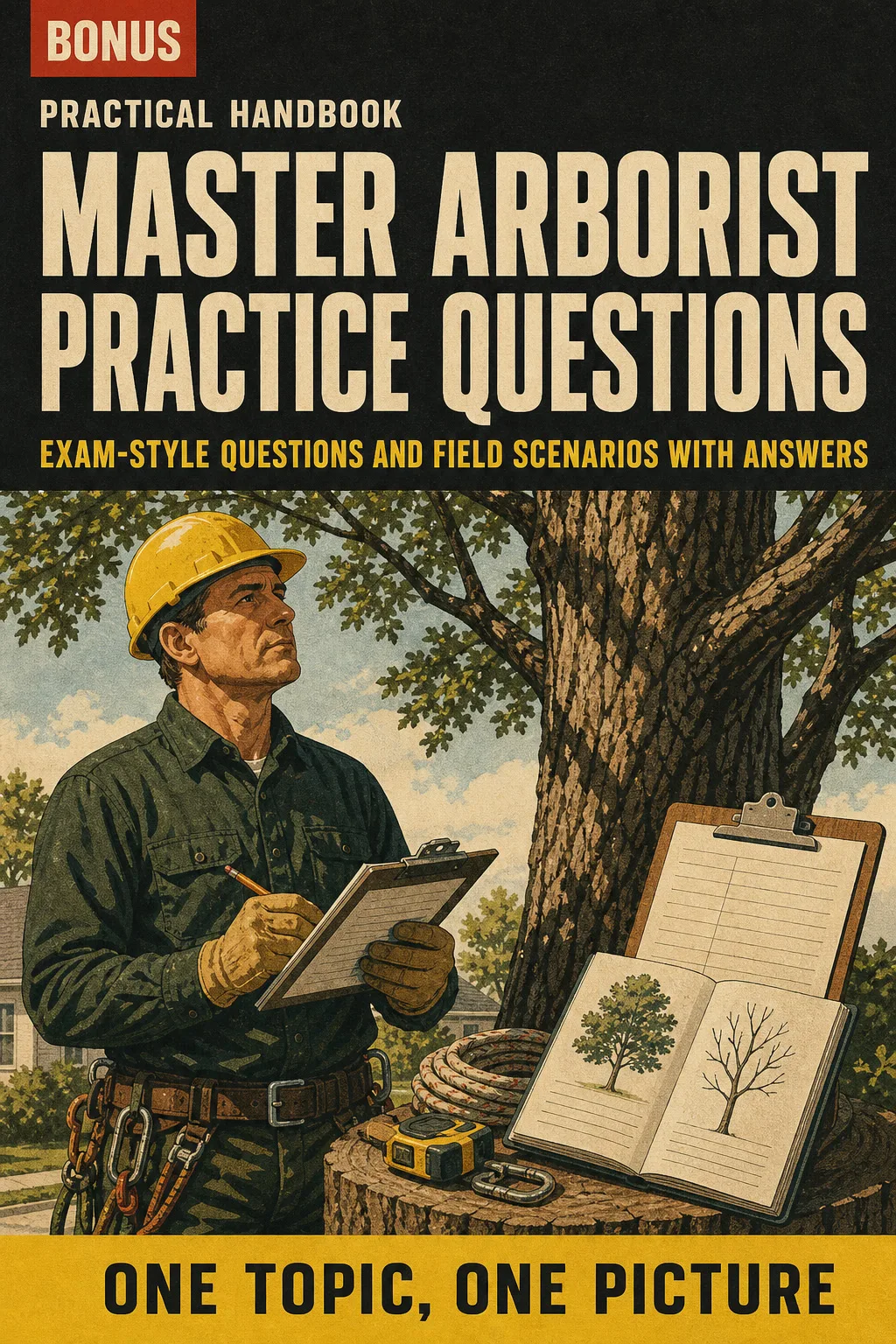
Master Arborist Practice Questions: Exam-Style Questions and Field Scenarios with Answers

BONUS 1: «Master Arborist Practice Questions: Exam-Style Questions and Field Scenarios with Answers»

Value on its own: US$ 17.90

Practice the way the exam asks: multiple-choice and scenario questions, each with the answer and the reasoning step by step, so two right-looking answers stop being a coin toss.

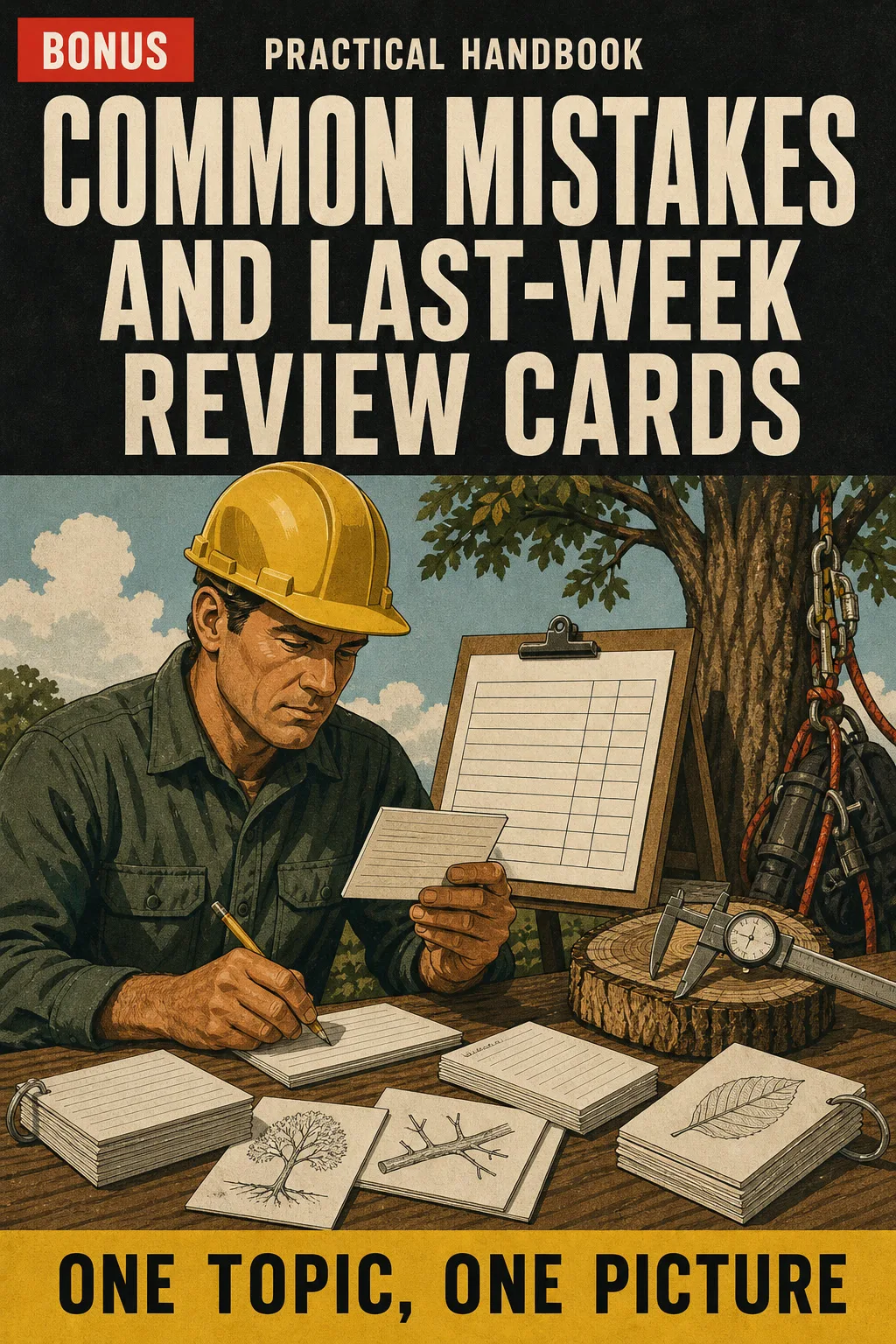
Common Mistakes and Last-Week Review Cards

BONUS 2: «Common Mistakes and Last-Week Review Cards»

Value on its own: US$ 14.90

The most frequent mistakes in pruning, soils, risk and PHC drawn before and after, plus one-page review cards to print and go over on the job site.

Master Arborist Exam, Illustrated with 2 Free Books

  • Master Arborist Exam, Illustrated: 67 illustrated pagesUS$ 63
  • BONUS 1: Master Arborist Practice Questions: Exam-Style Questions and Field Scenarios with AnswersUS$ 17.90
  • BONUS 2: Common Mistakes and Last-Week Review CardsUS$ 14.90
  • High-resolution PDF to printIncluded
Total value US$ 95.80
YOUR PRICE:
US$ 27
You save US$ 68.80
YES, I WANT MASTER ARBORIST EXAM, ILLUSTRATED FOR US$ 27

📄 This is a digital PDF book sent to your email: nothing is printed or shipped.

Secure purchaseEncrypted payment30-day guarantee

PDF by email: We email you Master Arborist Exam, Illustrated as a PDF, together with the two free books. It's a single payment: no installments, no extra charges.

Who This Book Is For

You're studying for the master exam

You're studying for the master exam

Each topic of the outline on one drawn page, so a night of reading after work actually stays with you.

Your exam date is close

Your exam date is close

Ten worked scenarios on the same five-step path and one page with the numbers to know, printed and ready to review in the truck.

You already run crews or consult

You already run crews or consult

The risk matrices, protection zones and written specs drawn and at hand when you prepare a report or a bid for a city.

Everything You Get Today

US$ 95.80US$ 27
YES, I WANT MASTER ARBORIST EXAM, ILLUSTRATED FOR US$ 27

📄 This is a digital PDF book sent to your email: nothing is printed or shipped.

30DAYS
GUARANTEE

30-Day Guarantee

Try Master Arborist Exam, Illustrated for 30 days, bonus books included.

We refund everything if the file won't open, if the book isn't what you see here, if you were charged twice or if the email doesn't arrive. Just email us.

You pay once. No subscriptions.

Frequently Asked Questions

Is it for the Board Certified Master Arborist exam, or the same as the certified arborist guide I already have?

It's for the master exam, not a redraw of the certified guide. Biology and soils are reviewed at master depth, and most pages go to what the master exam adds: risk assessment, trees on construction sites, urban forestry, consulting and scenario questions where two answers look right. The drawings don't simplify the trade; they let you review the theory fast after a day in the field.

Where does the content come from?

From the published content outline of the master arborist exam, checked against the current editions of ANSI A300 (pruning, support systems, construction management and the rest of the standard), ANSI Z133 for safety and the companion best management practices, including tree risk assessment. Each page notes which standard its numbers come from, so you can check them against your copy.

Is this official material?

No. It's an independent illustrated study book. It is not affiliated with or endorsed by ISA or ANSI.

Does it replace a course or training?

No. It's study and review material. It doesn't give CEUs or a certificate, and it doesn't replace training, field experience or the current standards themselves.

Are the practice questions the ones on the exam?

No. They are written for this book, in the style of the exam, each with the answer and the reasoning step by step.

When and how do I get it?

The book and the 2 bonus books arrive as PDFs by email, at the address you enter at checkout.

Do I have to pay every month?

No. It's a one-time payment.

Can I have it on paper?

Yes. The PDF is ready to print, whole or page by page, so you can keep it in the truck.

How does the refund work?

You have 30 days. We refund everything if the file won't open, if the book isn't what you see on this page, if you were charged twice or if the email doesn't arrive: just email us.

Before You Close This Page

No more rereading without anything sticking.

CODIT's four walls: you see them drawn, and that's it.

You walk into the exam knowing where everything is.

Drawings make studying faster.

The book is right below.

One-time payment: US$ 27 · Guarantee: 30 days · PDF by email

YES, I WANT MASTER ARBORIST EXAM, ILLUSTRATED FOR US$ 27

📄 This is a digital PDF book sent to your email: nothing is printed or shipped.